Inside the high-stakes arena of today's professional sliding, podium finishes is no longer purely a result of brute horsepower or behind-the-wheel aggression. Rather, it has evolved into a multifaceted engineering challenge that necessitates a painstaking fusion of selecting a inherently capable chassis, arming it with the highest-quality drift-spec parts, and, most importantly, comprehending its dynamic characteristics on the track through sophisticated vehicle dynamics analysis tools. This exhaustive guide functions as your roadmap starting from the initial idea of a competition vehicle right through to the last engineering-refined tweaks that elevate a powerful vehicle into a consistent champion. We will examine in detail the methodical process of car suspension tuning, showing how a advanced drift tuning app like GripDial eliminates assumptions and provides unparalleled insight into your car's real-world behavior.
The cornerstone of any great competitive sliding vehicle is, without question, the platform itself. Several platforms have earned renowned standing within the worldwide sliding scene due to their built-in balance, robust build quality, and the enormous range of performance parts available. Selecting the right platform is the first and most important choice a driver will make. As an example, the the E36 generation BMW is widely regarded as among the best balanced cars for drifting of history. Its near-perfect evenly distributed mass, alongside a rear-wheel-drive setup and robust straight-six engines, forms a car that is simultaneously easy to handle for newcomers and incredibly effective in the hands of a professional competitor. The successor of this concept, the BMW E46 platform, builds upon these attributes with a increasingly refined chassis, broader track for enhanced confidence, and yet increased turning capability straight from the OEM. Another powerful option in the top-level scene is the C6 generation Corvette.
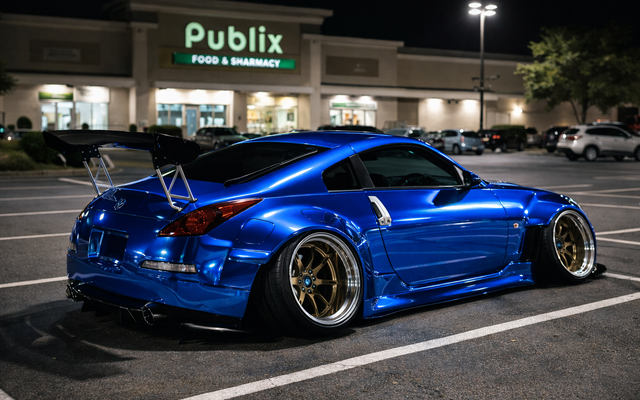
This V8-powered sports car offers a unique set of advantages to the sliding sport, including a lightweight aluminum frame, a transaxle-style drivetrain component that aids in an excellent weight distribution, and the immense torque of a big LS V8 motor. This blend transforms it into an absolute force on track, designed of entering and sustaining long angles with relatively minimal deployment of acceleration. For those desiring outstanding value, the 350Z model Nissan rises above as a top-tier example. It comes from the factory with a stiff platform, a competent OEM LSD, and the responsive VQ series motor that delivers plenty of horsepower and torque for learning and progressing in the sport. Its newer version, the 370Z model, presents more improvements in body strength, suspension design, and peak motor output, establishing its position as a popular pick among competitive pilots. Further iconic platforms that deserve attention encompass the lightweight Wankel-engined Mazda FC, the most popular S13 Silvia/240SX, the American Ford Mustang SN95, the more recent BMW E90, and the tiny yet unbelievably engaging and instructive MX-5 Miata. Each of these platforms provides a unique palette of attributes, difficulties, and capabilities, but they all have in common the fundamental components essential to serve as a competitive drift machine.
However, selecting the correct car is only the starting point. To unlock the complete potential of any of these vehicles, major modifications to the steering geometry and chassis control systems are utterly essential. This is where the world of specialist tuning components becomes vital importance. The single most game-changing modification for a purpose-built competition vehicle is the integration of a maximum-angle drift angle kit. These engineered kits, like those developed by industry leaders like SLR, are designed to significantly enhance the vehicle's available steering angle. A OEM street car is severely limited in how far its tires can rotate, a safety limitation for daily use. In drifting, but, maximum steering input is continuously required to manage and maintain a slide. An angle kit substitutes the factory hubs, rod ends, and often suspension arms with parts that enable the front tires to reach angles in excess of 70 or even 80 °, versus a typical OEM setting of around 40 to 50 degs.
This tremendously greater lock gives the driver with dramatically enhanced command during a angle, enabling it to be considerably more straightforward to start a oversteer moment, maintain it through a sweeping corner, and transition seamlessly from one side to the other. The contrast in drivability is truly revolutionary. Combined with a correctly chosen steering kit is the equally critical modification to the vehicle's suspension. Generic or including premium street adjustable suspension are just not intended for the specific and brutal requirements of drifting. A dedicated pair of adjustable dampers is of utmost importance. These specialized dampers feature unique damping rates and spring stiffness that are tuned for the extreme load shifting that is typical of sliding. When a driver starts a slide, the vehicle's weight is thrown forcefully to the outer of the bend. Optimal competition suspension handle this shift in a consistent way, permitting the car to settle quickly and providing the driver precise feedback through the controls and driver's seat. They also provide exact adjustment of ground clearance, shock absorber firmness, and cross-weight, which are all integral aspects of dialing in the vehicle's behavior to a particular venue or competition style. Together, a top-tier steering angle kit and a correctly specified pair of competition suspension units form the core physical foundation upon which all later optimization is built.
Once the essential hardware is fitted, the following essential step in the project is the detailed adjustment of the car's wheel angles. This is the domain of vehicle alignment optimization, a methodology that can feel overwhelmingly complex to the uninitiated but is, in reality, the key to transforming a collection of capable pieces into a cohesive and predictable whole. The most critical parameter of alignment for oversteer is undoubtedly camber. Wheel camber is the inclination of the tire in relation to the vertical axis when observed from the forward of the chassis. When the top edge of the tire is angled inward, this is known as negative camber. In drifting, inward-leaning wheels on the front tires is universally used and is seen as critical. The purpose is fundamentally related to vehicle dynamics.
When a car is going around a bend at high slip angles, the frame tilts towards the external of the turn. This chassis roll causes the outer front wheel to diminish its ideal footprint with the asphalt. By applying negative camber, the wheel is pre-leaned to account for this roll. As the chassis rolls into the corner, the tire gains a better contact patch with the track, increasing its bite at the critical time when it is absolutely essential for steering authority. Typically, front axle camber settings for a competition drift machine fall between approximately -3 degrees to as much as -5 degrees or even more, based on the specifics of the car configuration, compound choice, and driver style. The rear axle tires also use negative camber, but the values are usually more modest and more nuanced than the front. Overly aggressive negative camber at the back can cause the vehicle to excessively loose and difficult to predict on acceleration input, as it diminishes the effective grip area of the driven wheels during straight-line throttle application. Hence, rear axle camber settings are frequently in the vicinity of -1 degree to -3 degrees, finding a careful balance between giving sufficient cornering bite to assist in starting and maintaining the drift while still preserving usable grip for exiting the turn. Camber is just one component of the more complex tuning equation, which furthermore includes toe, caster angle, and steer correction correction.
Toe setting refers to the orientation of the tires when viewed from above. Toe-in means the leading edges of the tires are nearer together than the rear edges, while outward toe means the opposite. For drifting, a small amount of front toe out is frequently run to quicken the initial response steering response, making the vehicle feel more responsive and willing to initiate a drift. Rear toe is typically set to zero or a very slight amount of inward toe to encourage straight-line stability under throttle. caster angle is the forward or aft tilt of the kingpin axis when observed from the side-on of the chassis. Increased caster increases self-centering and high-velocity stability, and it furthermore boosts negative camber increase during turning, which is very advantageous. Setting these values is a intricate interplay where a modification to one setting can and will affect the other settings. The traditional process for setting a vehicle's suspension geometry for competition has long been a time-consuming process of experimentation and feeling. A pilot or engineering group would drift tuning app introduce a modification based on a hunch, test the vehicle on track, depend on the driver's subjective perception and feedback, and then apply an additional change. This cycle would iterate time after time until the car felt "good" or the scheduled track period was exhausted. This approach is not only exceptionally wasteful in terms of time and resources, but it is also deeply inaccurate.
Human sensation is a famously subjective metric, affected by numerous elements such as tiredness, changing track grip levels, ambient heat, and simply the mood of the operator on that given day. What feels "tail-happy" on one run might feel "pushing" on the following pass, causing confusing feedback and frustrating tweaks. This long-standing limitation in vehicle dynamics optimization is precisely where modern engineering tools has intervened to transform the landscape.
The development and integration of specialized drift telemetry software has brought about a new age for tuning and perfecting competitive drift machines. These platforms, exemplified by innovative solutions like data acquisition tools, operate by physically recording the actual dynamic behavior of the car as it is being driven on the track. In contrast to depending on subjective impression, these tools collect measurable information on essential variables such as damper compression and extension, wheel speed, G-force loading, lock position, and driver input application. This acquired information flow is then processed by sophisticated algorithms that can visualize and decode the metrics in a clear way. For the first time, engineers and builders can visualize exactly what the vehicle is doing at every millisecond of a lap. This capability changes the entire alignment optimization workflow. Imagine the aforementioned task of setting the front camber for a drift tuning app specific vehicle. Instead of applying a modification from -3 degrees to -3.5 degrees and then testing many laps to try and "sense" a change, a telemetry system can provide instant and definitive feedback. The software can show in a chart how the wheel's contact patch is acting during the key moments of a drift: the initial flick, holding the angle, and switch. It can demonstrate if the present angle is allowing the steering tire to maintain ideal grip or if the tire is overloaded on its outer shoulder.
The software can then make fact-based suggestions for change. Perhaps the telemetry shows that the tire is still overloading its outer shoulder at -3.5 degrees of negative camber, indicating that an increase to angle, say -4 degrees, might be beneficial. Alternatively, the data might reveal that the tire is not reaching temperature or that the inside shoulder is wearing too quickly, which could point to that there is excessive negative camber and a modest decrease back to -3.2 degrees would be more efficient. This degree of accuracy and practical insight was simply unimaginable in the time of exclusively manual adjustment.
The benefit of using a advanced drift telemetry system extends much further than only dialing in camber. It becomes an essential suspension tuning guide that is specific to your exact vehicle. When adjusting the rebound and compression values on your suspension, rather than depending on vague advice or copying another driver's settings, you can car suspension tuning use the software to analyze how the car is performing in reaction to your tweaks. The application can display the damper movement data over a section of track, revealing if the dampers are controlling the chassis motion effectively or if they are permitting the vehicle to oscillate excessively after a transition. It can help in identifying issues like excessive compression or losing droop, allowing you to introduce data-backed choices to helper springs, damping rates, or ride height. This process translates equally to the complex art of car alignment tuning. Beyond camber, the software can give insight into how changes to toe settings and caster angle are affecting the car's stability during different parts of a lap. For example, it can allow you to determine the best amount of front axle toe out for your particular steering rack geometry and competition approach by analyzing the quickness of initial reaction and the consistency of the vehicle at full lock. This makes the software an exceptionally effective performance optimization handbook that is constantly updated by the real-world dynamics of your own vehicle on the track. It shifts the complete endeavor from a dark art into a repeatable optimization exercise.
Moreover, the value of a platform like data acquisition is in no way limited to experienced teams with vast funding. For the club-level enthusiast, it acts as an amazing force multiplier. It in essence gives the builder with the analysis of a full-time race engineer without needing the associated overhead. It speeds up the tuning process by delivering clear solutions to questions that would normally take seasons of experimentation to answer. A driver can see how their particular vehicle behaves to various inputs, developing a more intuitive comprehension of suspension theory in the endeavor. It additionally opens up advanced performance tuning techniques, permitting anyone with the drive to refine their machine to accomplish it in a systematic and productive manner. This is notably valuable in a activity like sliding, where setup expertise has in the past been a highly secretive advantage among elite drivers. Today, that power can be in the hands of every dedicated driver.
In conclusion, the process to engineering and dialing in the ultimate high-performance drift machine is a multi-stage endeavor that perfectly integrates classic hardware wisdom with 21st-century digital tools. It commences with the strategic selection of a capable platform, followed by the installation of essential competition hardware like drift-spec steering angle kits and expertly valved competition adjustable dampers. The build then moves into the detailed realm of chassis dynamics adjustment, where parameters like camber, toe, and caster are carefully configured to complement the chassis's new hardware and the pilot's individual style. Finally, and what really differentiates the contemporary methodology from the past, is the integration of a sophisticated drift telemetry software. This platform removes the guesswork and waste of solely subjective adjustment by providing empirical, real-time telemetry on how the car is really performing. It functions as an indispensable engineering partner, a definitive alignment optimization handbook, and a all-in-one chassis development system. Together, this integrated methodology guarantees that all element of the drift car—from the pick of the platform to the last adjustment on the damper—is optimized for peak competitiveness on the competition venue. It signifies the full evolution of the sport of oversteer driving, merging raw car control with surgical vehicle setup to create the most effective vehicles attainable.